Imagine a small shopkeeper in a Tier-3 town who needs ₹50,000 to expand inventory for the festive season. They have no salary slips, no income tax returns, and zero formal credit history. A traditional bank might turn them away.
Enter NBFCs (Non-Banking Financial Companies).
By utilizing alternative underwriting models, digital onboarding tools, and fast decision-making, NBFCs reach millions of borrowers that traditional banks miss. Today, from two-wheeler financing and gold loans to multi-crore infrastructure projects, NBFCs power India's real economy.
But for students and fresh job seekers, NBFCs represent something even bigger: one of the fastest-growing hiring grounds in the entire BFSI sector.
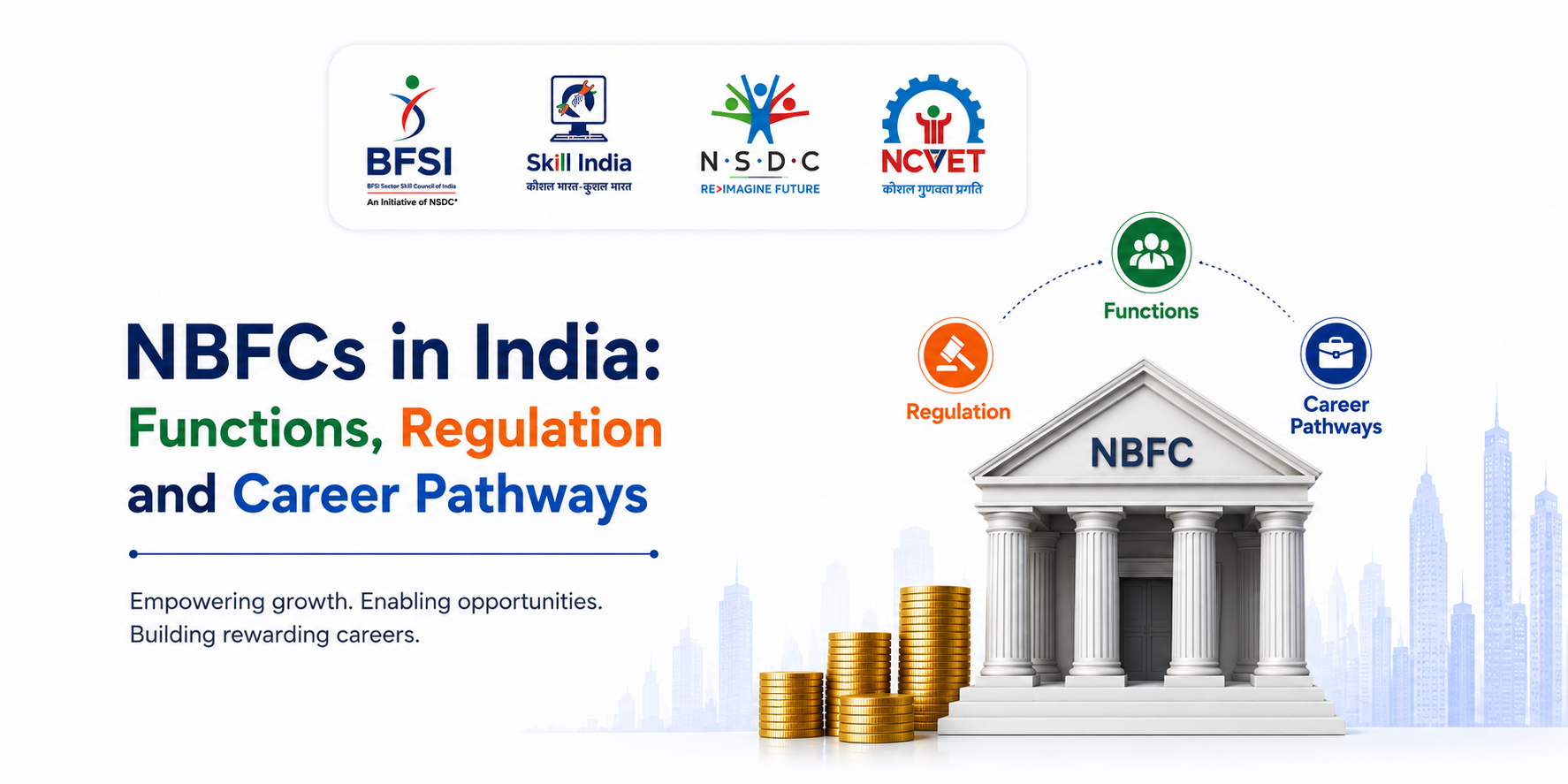
Let's explore how these financial engines work, how the RBI regulates them, and how you can position yourself for high-demand NBFC career pathways.
Understanding NBFCs: The Fundamentals
An NBFC is a financial institution registered under the Companies Act and regulated by the Reserve Bank of India (RBI). Under the RBI's Principal Business Test (50-50 Rule), a company qualifies as an NBFC if its financial assets exceed 50% of total assets and its financial income exceeds 50% of gross income.
Unlike traditional banks, NBFCs cannot accept demand deposits (like savings or checking accounts) or issue cheques drawn on themselves. Instead, they specialize in targeted credit delivery, asset financing, microfinance, housing finance, and digital lending.
10 Core Functions Driving NBFC Growth & Hiring
Understanding what an NBFC does helps you identify where hiring happens:
- Underserved Credit Delivery: Extending loans to small merchants, Tier-2/3 borrowers, and first-time loan applicants.
- Microfinance (NBFC-MFI): Providing collateral-free financial support to low-income households and self-help groups.
- Asset Financing: Leasing and financing vehicles, tractors, commercial equipment, and machinery.
- Infrastructure Funding (NBFC-IFC): Channeling long-term capital into roads, energy, and logistics projects.
- Housing Finance (HFC): Delivering affordable home loans and property-backed finance.
- MSME Working Capital: Offering invoice discounting and factoring services to small businesses.
- Capital Market Operations: Investment management, corporate debt underwriting, and enterprise funding.
- Consumer Product Innovation: Pioneering point-of-sale financing, digital gold loans, and flexible EMI models.
- Tech Ecosystems (NBFC-P2P & AA): Managing peer-to-peer lending platforms and consent-based Account Aggregator data networks.
- Economic Capital Allocation: Mobilizing institutional resources to fund GDP-expanding initiatives.
RBI Scale-Based Regulation (SBR) at a Glance
The RBI regulates NBFCs across a four-tiered structure based on scale and risk profile:
| Layer | Description |
| Base Layer (NBFC-BL) | Non-deposit entities under ₹1,000 crore in asset size, plus P2P and Account Aggregator platforms. |
| Middle Layer (NBFC-ML) | All deposit-taking NBFCs, non-deposit NBFCs with assets of ₹1,000 crore or more, HFCs, and Infrastructure Finance Companies. |
| Upper Layer (NBFC-UL) | Systemically important NBFCs explicitly identified by the RBI, including entities with an asset size of ₹1,00,000 crore and above. |
| Top Layer (NBFC-TL) | Reserved for entities in the Upper Layer posing extreme systemic risk requiring custom supervision. |
In-Depth NBFC Career Pathways for Freshers & Graduates
Because NBFCs prioritize agility and domain specialization, they offer clear career progression paths for early-career professionals.
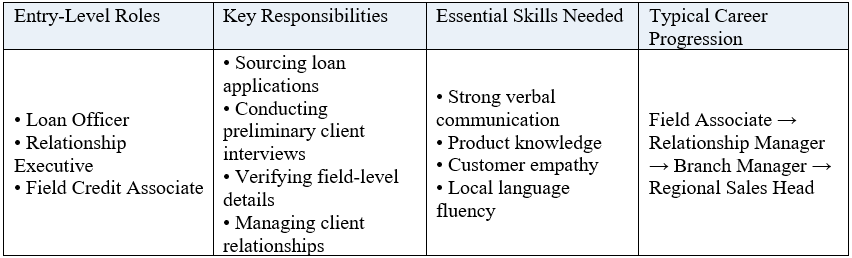
1. Front-Office Pathway: Customer Acquisition & Relationship Management
Front-office teams drive business growth by engaging clients, understanding credit needs, and originating loan applications.
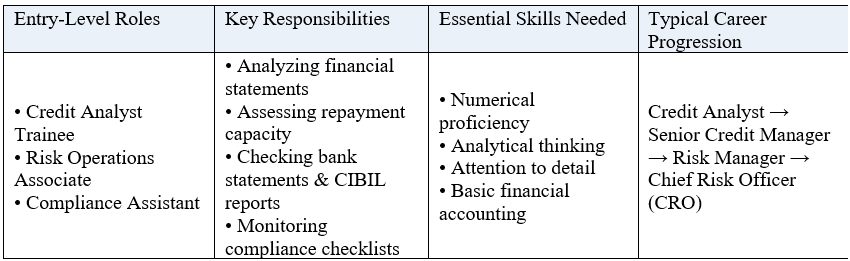
2. Middle-Office Pathway: Credit Risk, Appraisal & Compliance
Middle-office professionals evaluate risk, review borrower credibility, and ensure adherence to RBI regulatory frameworks.
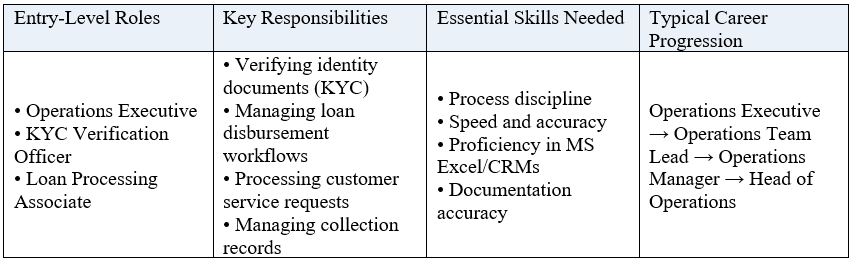
3. Back-Office Pathway: Operations, KYC & Portfolio Servicing
Back-office teams ensure the smooth execution of financial services, handling onboarding, documentation, and disbursements.
4 Essential Skill Sets Employers Look For in NBFC Candidates
To stand out during campus drives and interview processes, candidates should focus on four core pillars:
- Digital Tool Familiarity: Comfortable working with CRM software, loan management systems (LMS), and data tools like Advanced Excel.
- Credit & Financial Assessment: Ability to read basic income statements, understand CIBIL/credit scores, and check bank statements.
- Regulatory & Process Awareness: Fundamental understanding of RBI guidelines, KYC/AML norms, and consumer protection standards.
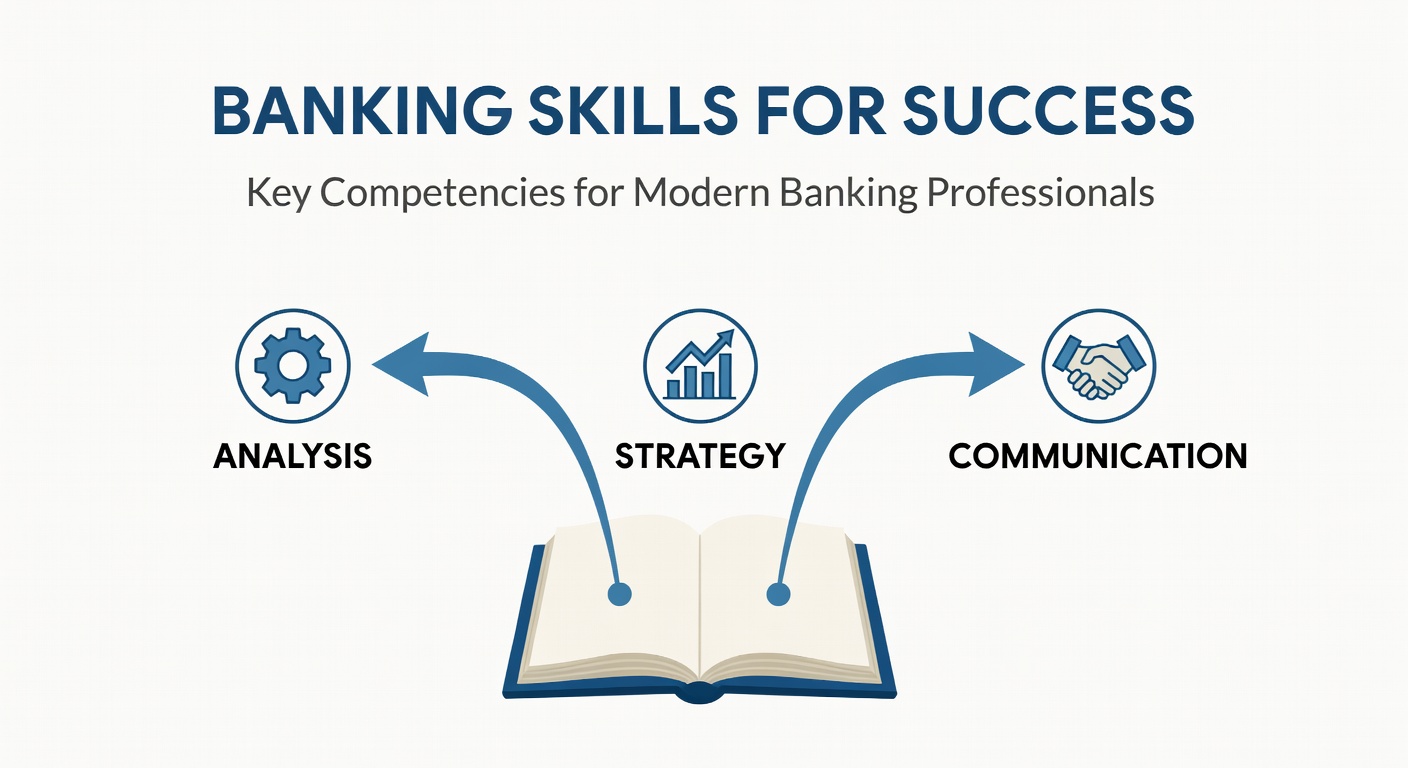
- Professional Communication: Clear, transparent interaction skills required for customer onboarding, field visits, or internal team coordination.
How to Prepare & Launch Your Career in the NBFC Sector
If you are a student, graduate, or job seeker looking to enter the NBFC space:
- Identify Your Functional Fit: Decide whether your strengths align best with Front-Office (sales/client-facing), Middle-Office (analytical/credit-risk), or Back-Office (operations/process) roles.
- Master Industry Fundamentals: Build a solid understanding of banking, credit cycles, non-banking financial functions, and RBI regulations.
- Acquire Job-Ready Certifications: Pursue recognized training programs in credit processing, digital operations, and financial services.
- Leverage Recognized Skill Pathways: Explore apprenticeship opportunities, vocational training, and skill development programs certified by the BFSI Sector Skill Council of India (BFSI SSC).
For more information on recognized skill standards, apprenticeship programs, and industry-certified career pathways, visit the official BFSI SSC portal.
![Online Banking in India: Changing BFSI Careers [2026 Guide]](https://bfsissc.com/blog2/uploads/thumbnails/6a968ba8d0cd2.png)