BFSI SSC Insight | October 2026
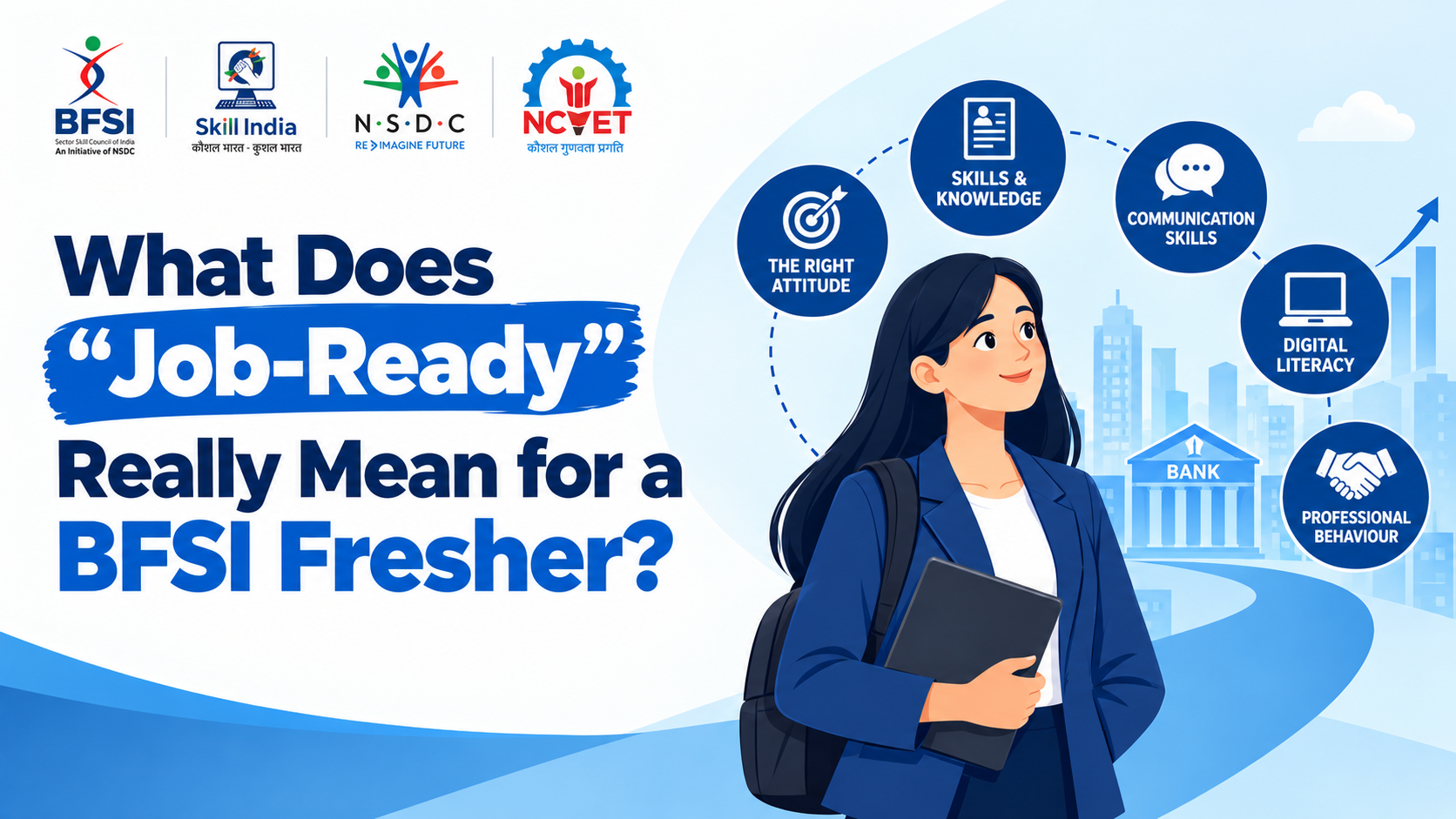
Two graduates can hold the same degree with similar marks, yet one gets the job and the other does not. Often the difference is job readiness: the practical skills and habits an employer wants to see before trusting someone with customers, money, or compliance.
The India Skills Report 2026 (ETS with CII, AICTE, AIU and Taggd) assessed over a lakh candidates across industries. It rated 56.35% of them employable, up from 54.81% the year before. The figure is not specific to BFSI, but it points to a wider pattern: a degree on its own does not always translate into job readiness.
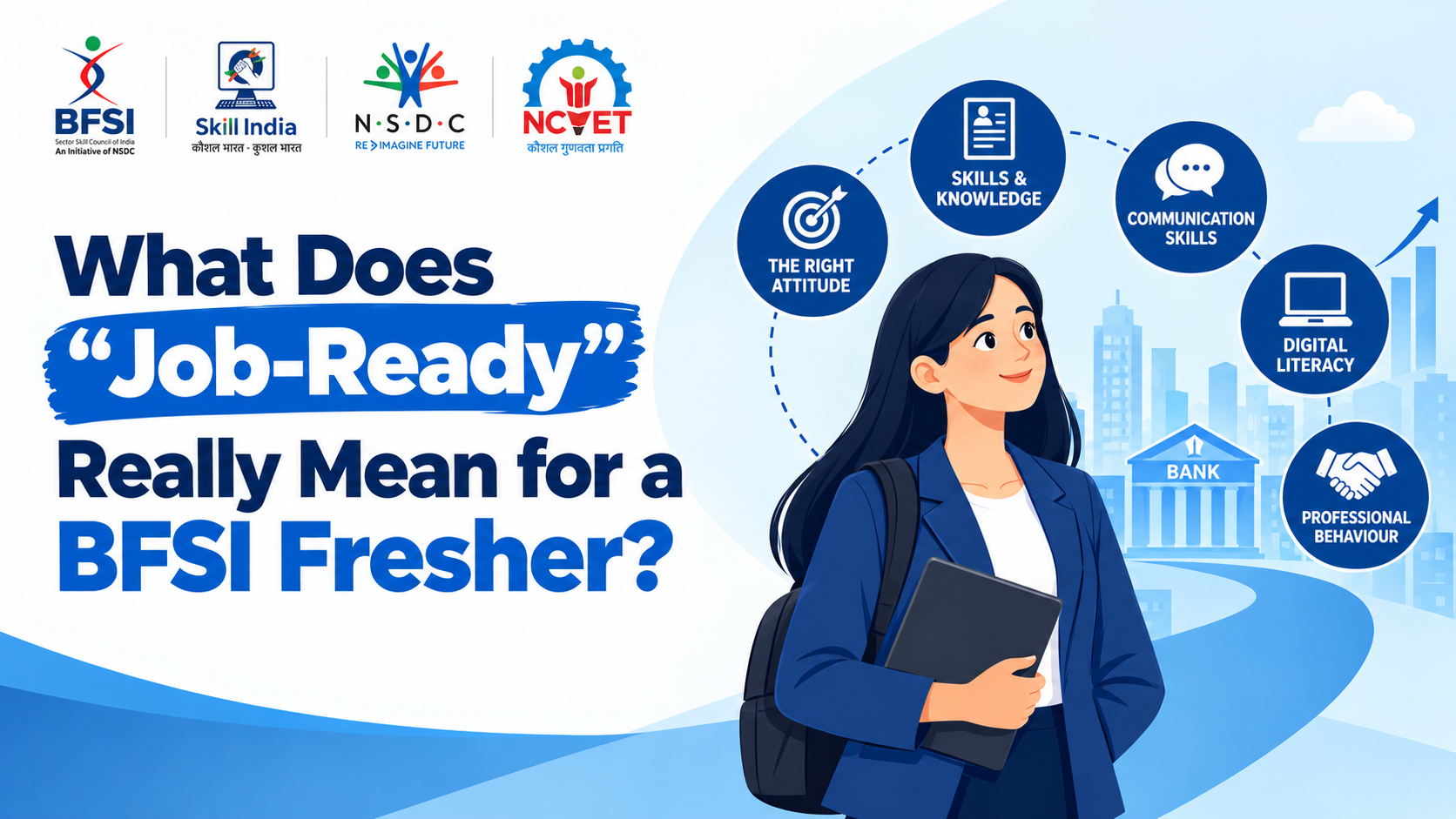
Job readiness can be looked at in many ways. One practical approach is to think about it across nine areas.
1. Understanding the Role
“I want a bank job” is a starting point, not a full answer. Titles such as relationship officer, operations executive, claims coordinator or sales executive involve very different work. It helps to be able to describe what a typical day in your target role looks like, which skills it uses, and what targets or deadlines come with it.
2. Understanding the Industry
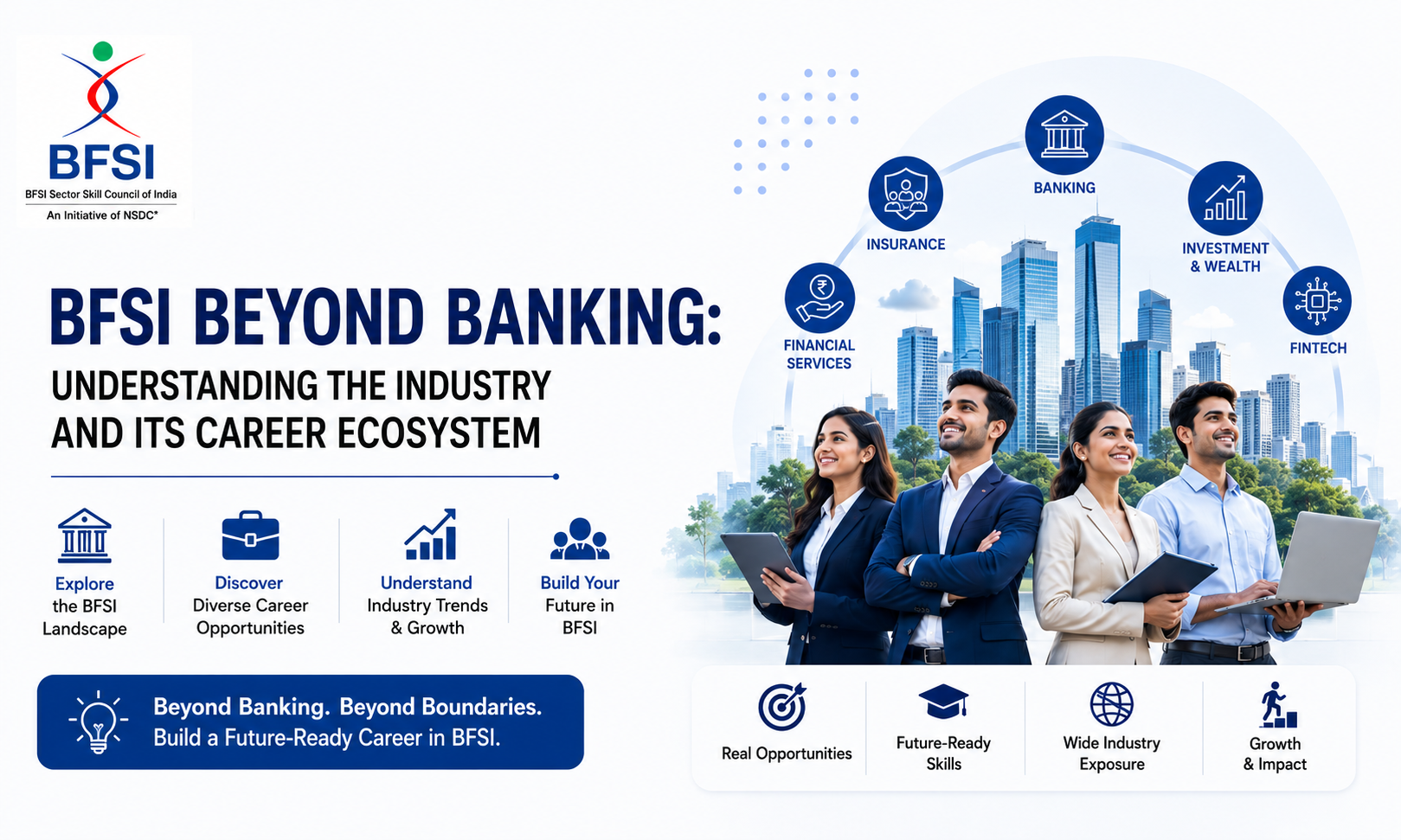
BFSI covers banks, insurers, NBFCs, and fintech firms, and hiring patterns differ across them. Apna reports that in Q1 FY27, insurance hiring rose 22.7% and lending and loan sales rose 14.9% year-on-year, while fresher-friendly banking operations roles fell 39.6%. This suggests customer-facing roles may be carrying more of the entry-level hiring. Knowing where openings are growing can help you focus your preparation.
3. Relevant Foundational Knowledge
Most entry-level roles do not expect expert knowledge, but a working understanding of the basics is useful:
- How savings, deposits, and loans work
- What insurance is and the common types of policy
- Basic terms such as interest, premium, KYC, and credit score
- Why regulation and compliance matter in financial services
A good check is whether you can explain a fixed deposit or a term policy to a first-time customer in plain words.
4. Professional Communication
BFSI work involves a lot of conversation. Clear emails, polite speech, careful listening, and explanations without jargon all help. Language can matter too. For sales roles, Adecco India found that candidates with local-language proficiency and grassroots sales experience were 2.5 times more likely to be shortlisted.
5. Customer Orientation
Financial products depend on trust, and customers tend to remember how they were treated. Staying calm with an upset customer, listening to the full problem, and giving accurate information instead of guessing are all part of customer orientation. Honest selling matters as much as closing the sale.
6. Workplace Discipline
Employers commonly look for:
- Punctuality and attendance
- Accuracy with numbers and documents
- Respect for processes and compliance rules
- Honesty about mistakes, raised early
In a sector where small errors can have financial consequences, reliability is valued highly.
7. Digital Familiarity
Banking and insurance now rely heavily on digital systems, from mobile apps to customer-management tools. Useful basics include:
- Email and professional messaging
- Spreadsheets and basic documents
- Online forms and digital KYC
- Learning new software tools quickly
8. Interview Preparedness
Preparation tends to show early in an interview. Researching the company and role, organising your documents, and practising answers aloud can all help. A specific example of teamwork, handling pressure, or learning something new is often more convincing than a general claim. Asking a thoughtful question, such as what training new joiners receive, can show genuine interest.
9. Ability to Learn
No fresher knows everything on day one, and employers generally understand that. Many look for curiosity, openness to feedback, and evidence of picking up new things, whether through an online course, a project, an internship, or an apprenticeship. Practical exposure can help here, because it shows how you learn in a real workplace.
A Quick Self-Check
| Area | Ask yourself |
| Role | Can I explain what my target role involves? |
| Industry | Do I know which BFSI segment interests me, and why? |
| Knowledge | Can I explain basic products in simple words? |
| Communication | Can I speak and write clearly? |
| Customer focus | Can I stay calm and helpful under pressure? |
| Discipline | Am I punctual, accurate, and honest? |
| Digital skills | Can I use everyday tools confidently? |
| Interview | Have I practised and prepared? |
| Learning | Can I show something new I have learned? |
Job readiness is not fixed at birth or decided by a single grade. It can be built over time through practice, internships, apprenticeships, and structured training, and different candidates will follow different routes.
FAQs
What does job-ready mean for a BFSI fresher?
It generally means having practical skills employers look for beyond a degree, such as role awareness, basic product knowledge, clear communication, customer focus, discipline, digital comfort, interview preparation, and the ability to learn.
Do I need a finance degree to be job-ready for BFSI?
Not necessarily. Eligibility varies by role, and many entry-level roles are open to graduates from any stream. What matters is readiness for the specific role.
How can I become job-ready for a BFSI role?
Common steps include researching the sector and your target role, learning the basics of banking and insurance, practising communication, gaining practical exposure through an internship or apprenticeship, and rehearsing for interviews.
Looking for structured skilling or apprenticeship opportunities in BFSI? Visit BEEP PORTAL
Sources:
- India Skills Report 2026 (ETS, CII, AICTE, AIU, Taggd), via Careers360, November 2025
- Apna BFSI hiring data, via The Tribune, September 2026
Adecco India BFSI report, via Business Standard, August 2025