How the BFSI Industry Creates Career Opportunities for Young Professionals
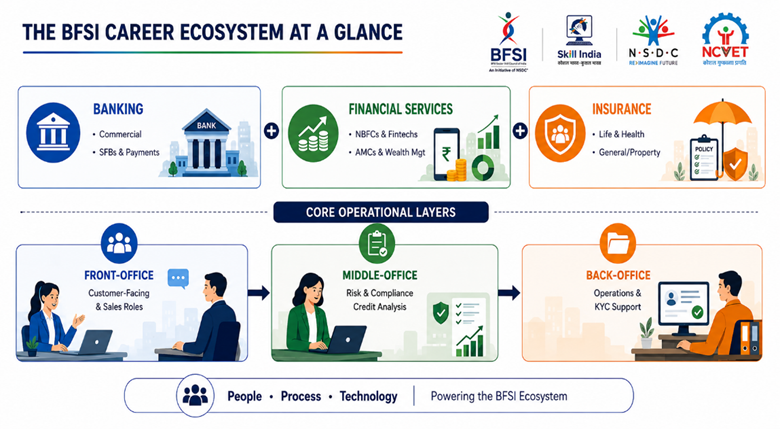
💡 Quick Takeaway: The Banking, Financial Services, and Insurance (BFSI) industry is far more than traditional bank teller counters. It operates as a multi-trillion-dollar interconnected ecosystem generating tens of thousands of entry-level roles each year across front-, middle-, and back-office functions.
The Banking, Financial Services, and Insurance (BFSI) industry does more than handle money. It works as a large, connected system that creates many different kinds of jobs. For students, graduates, and young professionals, this means there are multiple ways to enter the sector—if you understand how it works.
Here is a clear look at how the industry generates employment and how you can find a suitable starting point.
Growth of Financial Services as an Ecosystem
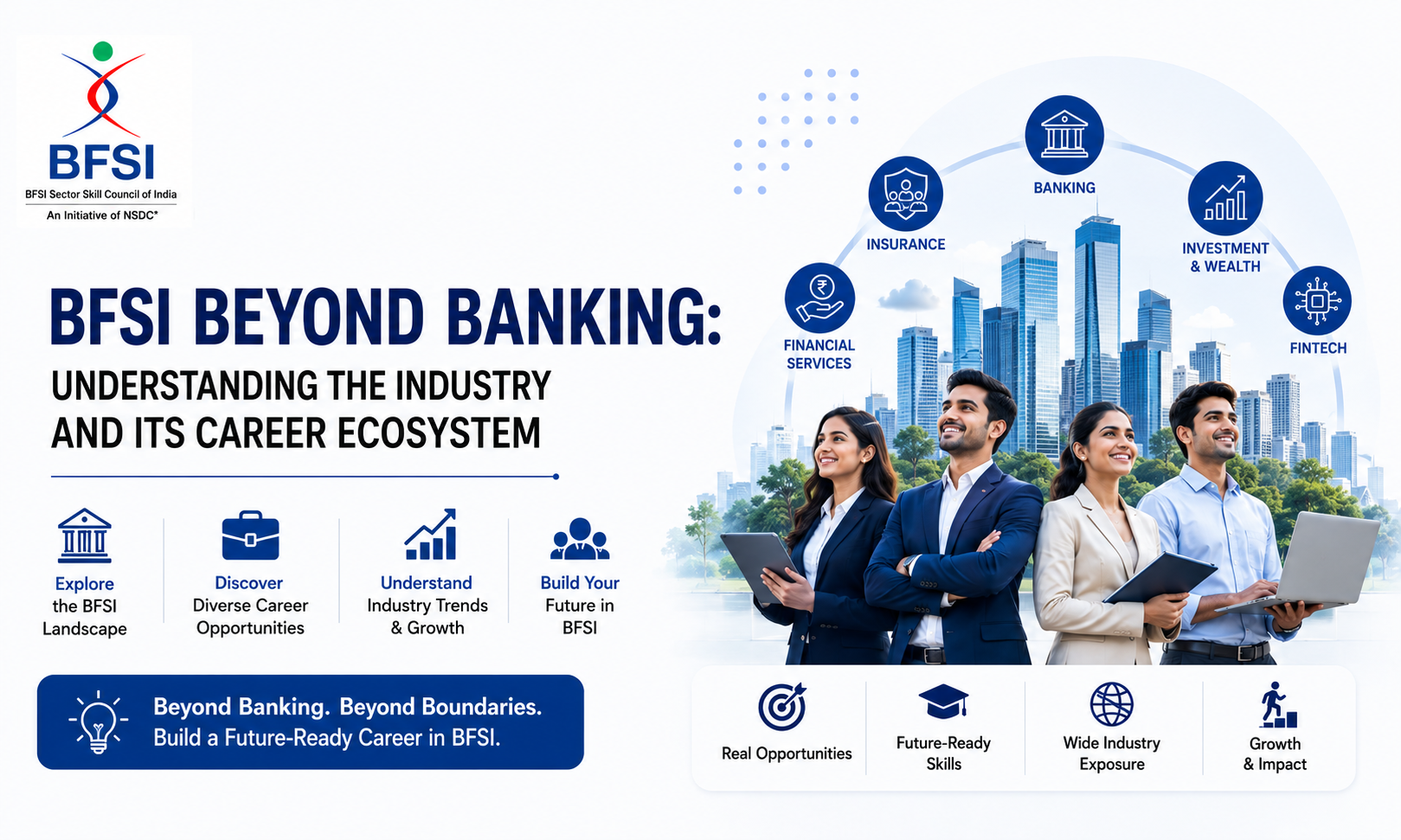
India’s financial services sector has grown far beyond traditional bank branches. Today, the ecosystem spans multiple high-growth segments:
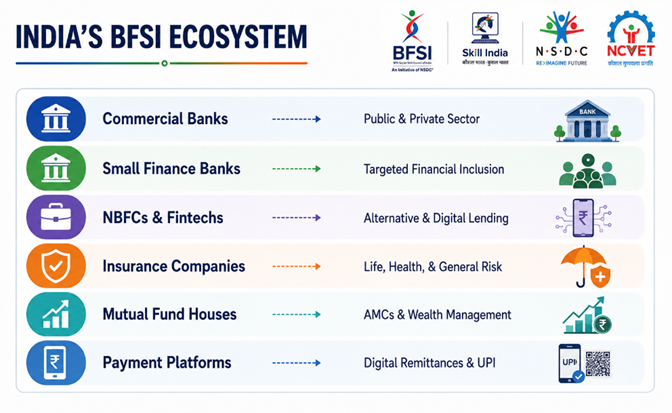
This growth creates jobs because every new product, customer group, or digital service needs people to design it, deliver it, monitor it, and support it. Expansion into Tier-2/3 cities and rural areas, rising formal credit demand, greater insurance coverage, and digital payments all increase the demand for trained talent. The result is a wider range of roles at entry and early-career levels.
Front-Office, Middle-Office, and Back-Office Functions
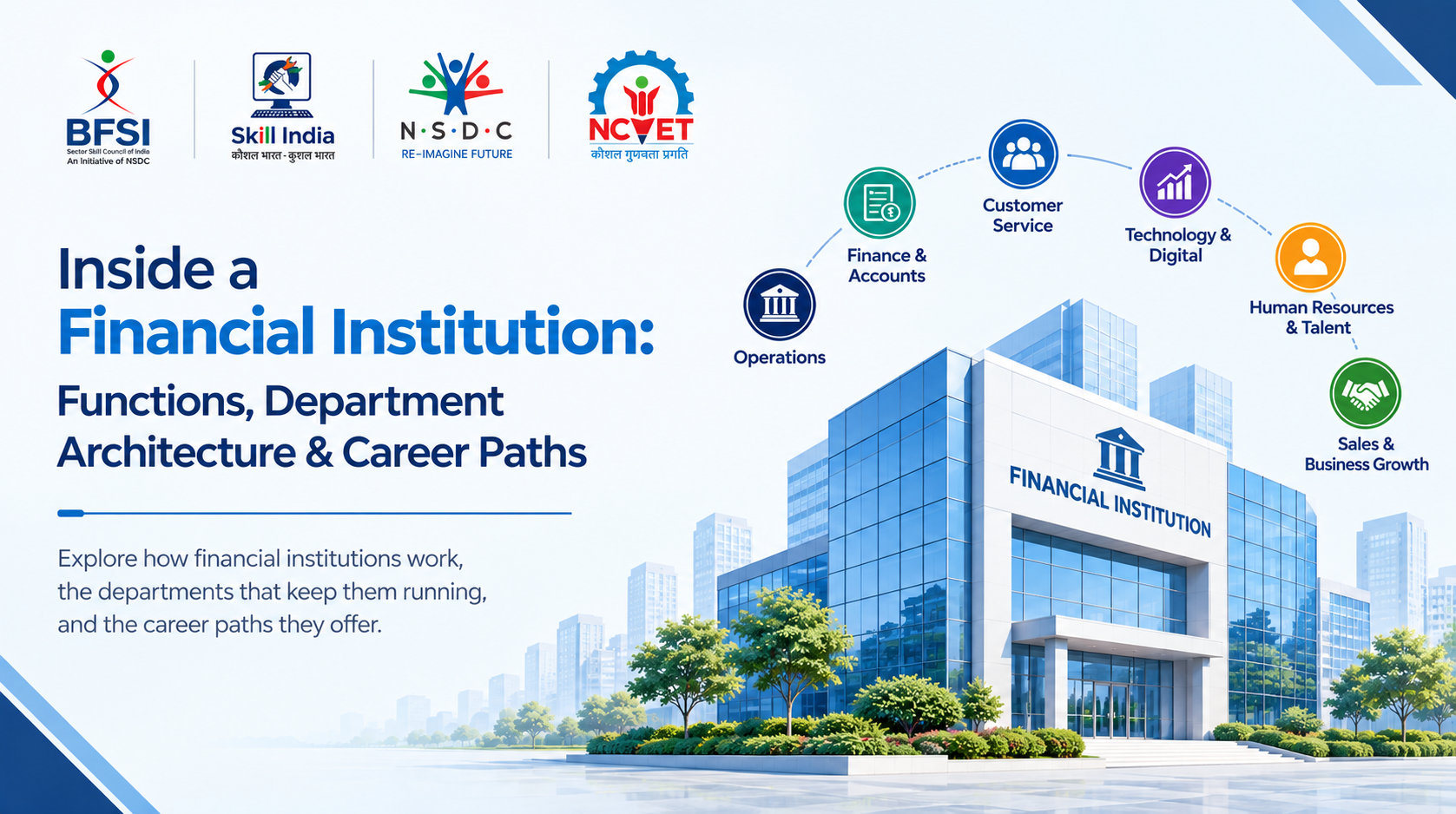
Most BFSI organisations divide work into three broad operational layers. Each layer creates distinct job opportunities based on your personal strengths and work style:
| Functional Layer | Core Focus | Common Entry Roles | Ideal Candidate Aptitude |
| Front Office | Revenue generation & customer acquisition | Relationship Manager, Sales Executive, Branch Officer | High emotional intelligence, active listening, clear verbal communication |
| Middle Office | Risk management, credit evaluation, & compliance | Credit Analyst Trainee, Risk Operations Analyst, Underwriting Support | Numerical proficiency, analytical thinking, strong attention to detail |
| Back Office | Operational processing, KYC, & documentation | Operations Executive, KYC Verification Officer, Loan Processing Associate | Meticulous process discipline, speed, accuracy, Excel proficiency |
- Front-Office: Engages directly with clients to source business, manage local wealth accounts, or drive direct sales.
- Middle-Office: Processes data between the customer interface and back-end execution. Teams handle credit metrics, compliance tracking, and risk parameters.
- Back-Office: Forms the operational backbone. These teams manage payment settlements, general ledgers, data verification, and documentation loops without managing sales metrics.
Role of Technology and Digitalization
Digital platforms have transformed how financial services are delivered. Core banking systems, UPI networks, online KYC tools, and mobile banking apps have automated repetitive manual work while creating a range of practical, hybrid job roles.
Technology-driven entry opportunities in the BFSI sector now include:
- Digital Banking Support Specialists: Assisting customers with app onboarding, login issues, and digital transaction processing.
- Fintech Operations Associates: Monitoring digital loan applications and automated workflow systems.
- Data Verification Officers: Reviewing digital identity documents (e-KYC) and flagged transactions for accuracy.
- Customer Experience Representatives: Resolving service tickets submitted through mobile apps and digital portals.
Candidates do not need advanced coding or software engineering degrees to enter these roles. Basic digital literacy, comfort with workplace software, and an understanding of banking processes are often enough to secure a starting position.
Customer Service and Relationship Functions
Customer service remains a major source of entry-level hiring across banks, insurers, and wealth management firms. Institutions constantly seek professionals who can communicate clearly, explain terms transparently, and build trust with clients.
Starting a career in relationship management, call center support, or branch customer service helps fresh graduates build vital professional capabilities—including conflict resolution, product mastery, and client communication—that lay the groundwork for long-term career growth.
Operations and Support Functions
Behind every approved loan application or issued insurance policy lies a step-by-step operational pipeline:
- Document Intake & Verification: Collecting identity proof, income records, and address documentation.
- KYC & Compliance Clearance: Checking applicant details against regulatory databases and Anti-Money Laundering (AML) standards.
- Credit Verification & Approval: Confirming repayment capacity and processing credit approvals.
- Loan Disbursement & Settlement: Transferring funds to the applicant's account and setting up repayment schedules.
Operations teams execute each step of this workflow to keep financial services moving accurately. Because these functions rely heavily on structured guidelines rather than aggressive sales targets, they serve as ideal starting points for fresh graduates. Structured apprenticeships and trainee programs frequently place candidates in these operations departments, giving them practical domain experience, a monthly stipend, and recognized industry credentials.
6 Essential Skill Sets Employers Look For
To stand out during recruitment drives and campus interviews, candidates should focus on building six core capabilities:
- Process Knowledge: Basic understanding of banking, insurance, and lending workflows.
- Communication Skills: Clear, professional written and verbal communication.
- Numerical Literacy: Comfort working with basic numbers, ratios, and spreadsheets.
- Digital Literacy: Proficiency in Microsoft Excel, web portals, and CRM software.
- Compliance Awareness: Familiarity with basic KYC, customer protection, and privacy rules.
- Workplace Discipline: Consistency, attention to detail, and operational integrity.
How Graduates Can Identify Suitable Entry Points
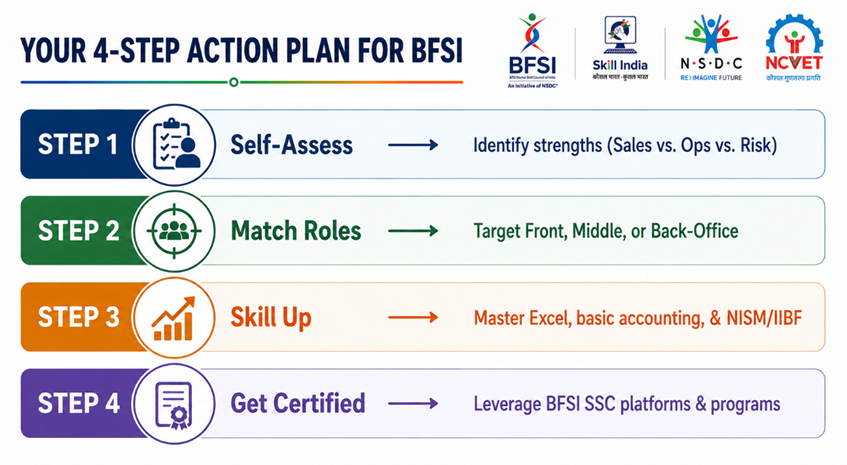
- Self-Assess Your Strengths: Decide whether your profile fits client-facing roles (Front-Office), analytical evaluation roles (Middle-Office), or systematic process management (Back-Office).
- Review Job Descriptions: Read entry-level job posts from banks, NBFCs, and insurers to identify recurring skill requirements and eligibility criteria.
- Acquire Practical Skills: Master tools like Microsoft Excel, learn basic financial statement analysis, and study introductory credit guidelines.
- Leverage Industry Recognized Frameworks: Explore training programs, apprenticeship models, and skill standards recognized by the BFSI Sector Skill Council of India (BFSI SSC) to connect directly with hiring institutions.
The BFSI industry offers diverse career paths for young professionals who build the right skills and choose roles that match their strengths.
Explore structured pathways, apprenticeships and skill programmes that help you enter India’s growing financial sector with clarity.
Visit the official BFSI SSC website at www.bfsissc.com to take your next informed step.